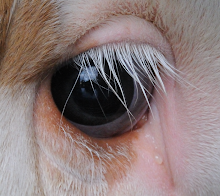
Goethe maintained that even the eye we use to observe the world 'owes its existence to the light. Out of indifferent animal organs the light produces an organ corresponding to itself; and so the eye is formed by this light for the light so that the inner light may meet the outer...If the eye were not sunlike how could we perceive the light?'
Looks like a piece of intestine. Not a snake, I am told, but a limbless lizard. Long-lived, they say. Maybe 30 years. A single slow patient pink fingertip pushing and feeling a way into the dark belly of the ground, nosing for slugs and worms.
Well, that's good enough advice as I start out, not knowing the way.
This project will explore the relationships between scientific and aesthetic responses to the objects in the Natural History Collection, as a site for the production of knowledge about the natural world.
A blindworm bleached and suspended in a spirit jar; a wax scale model of a fish brain on a turned ebony handle; a calculation of the mass in cubic miles of salt in the world’s oceans written in a careful copperplate hand on a glass lantern slide: these objects are now distanced from modern scientific approaches by perhaps a century, and now seem strangely poetic. Each specimen is a fragment of ‘the wild’ that became ‘science’ and is now ‘history’.